Roof Leak After A Storm In Amsterdam: Costs And Insurance
Published · Hoogwaardige Dakwerken
A roof leak after a storm in Amsterdam is less a matter of if than when. At Schiphol, the KNMI (the Dutch weather service) records an average of 15.4 days a year with an hour or more of force 7 winds, plus 17.6 days with gusts of 21 metres per second or above, based on its 1991-2020 figures. Add roughly 850 millimetres of rain a year and a slipped tile soon turns into a brown stain on the ceiling. If you’ve moved here from abroad, the Dutch insurance side can be confusing on top of that. Policies talk about Beaufort numbers, eigen risico and achterstallig onderhoud, and none of it is explained on the doormat. This guide covers what to do in the first hour, what a repair roughly costs, and the two rules that decide whether your insurer pays: the 14 m/s storm threshold and the maintenance clause.
First things first: the hour after the storm
If water is coming in right now, deal with the inside before the outside. Buckets, towels, and move anything electrical or valuable out of the drip zone. If water is running near a light fitting or socket, switch off that circuit at the fuse box (meterkast). Better to cook dinner by torchlight than to find out the hard way.
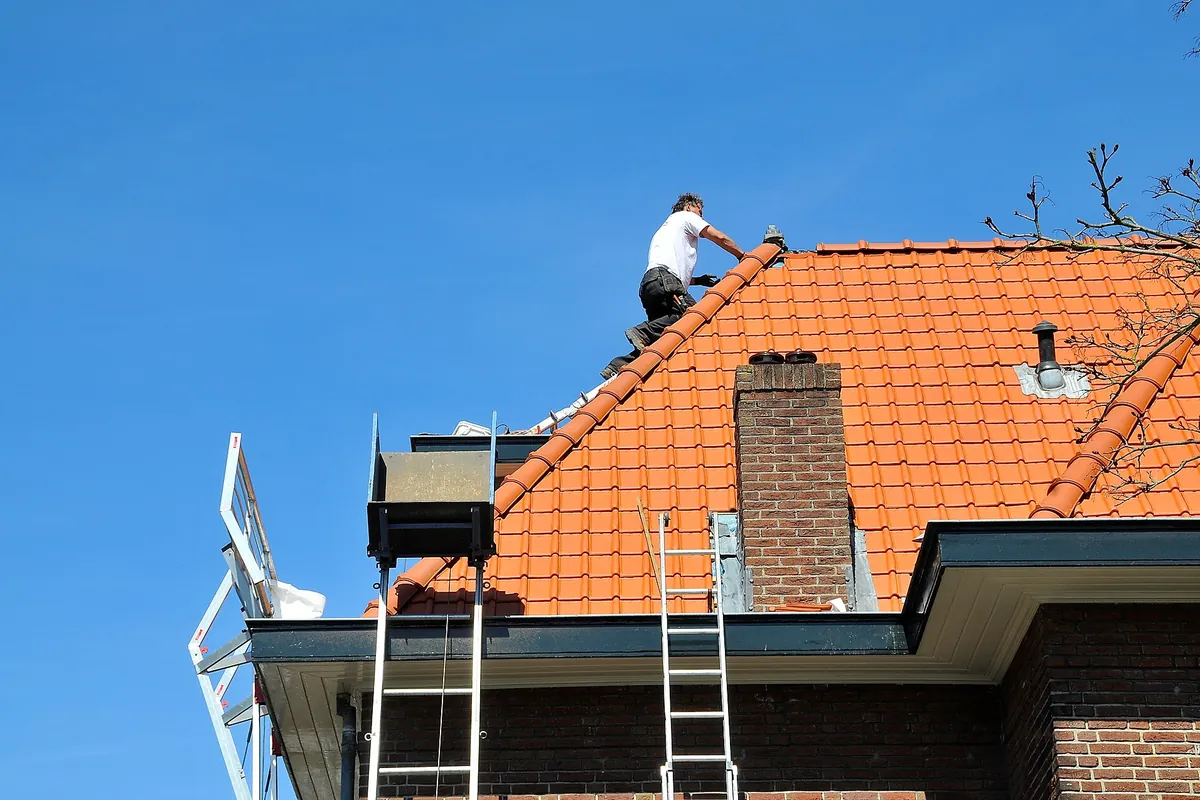
Next, collect evidence. Photograph and film the damage indoors, then the roof from the street, the garden or a window across the way. Write down the date and the time it started. Keep any tiles or bits of roofing that landed outside, because an adjuster will happily look at a broken tile and much less happily take your word for it.
Then stay off the roof. Dutch workplace safety law treats anything from 2.5 metres up as a fall risk that needs guardrails, nets or a harness, and that’s for professionals in decent weather. A wet roof in gusty wind is not the place to test your ladder. Call a roofer instead. Our page on roof leak repair in Amsterdam explains how we trace and fix leaks, in English if that’s easier for you.
What counts as a “storm” for a Dutch insurer
Most expats assume a big wind is a storm. Your insurer won’t. In Dutch policies the word usually means force 7 or more on the Beaufort scale. The Univé explanation of storm damage to roof tiles (in Dutch) puts a number on it: at least 14 metres per second, about 50 km/h, as measured by the KNMI. How it felt from your sofa doesn’t come into it.
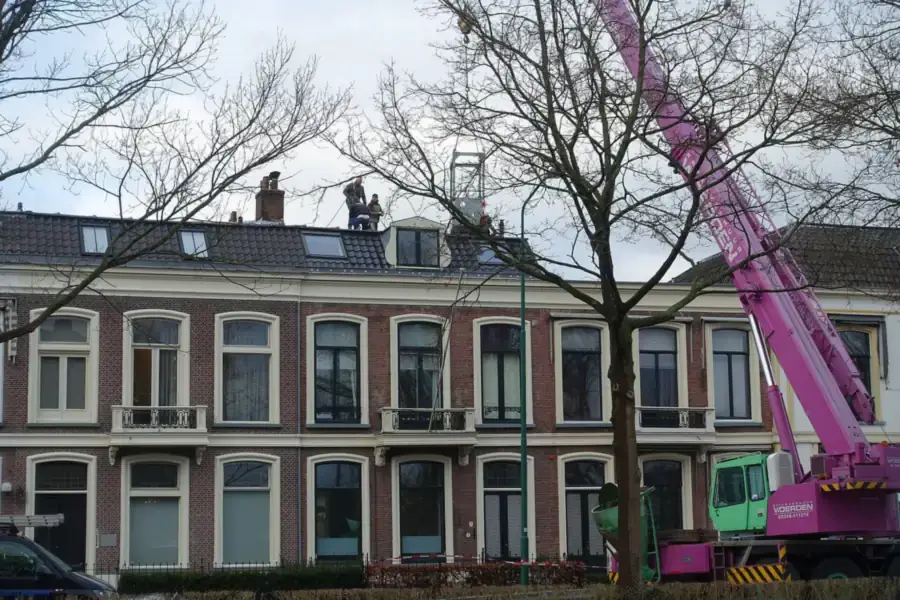
When the threshold is met, Univé covers blown-off tiles and the rain damage that comes in afterwards. If one of your tiles goes through the neighbour’s conservatory, that’s a liability claim, not a buildings claim.
Thresholds also vary. Comparison site Promovendum reports that most insurers use force 7, but some only pay from force 9, around 20 metres per second. So check the voorwaarden (policy terms) before you plan around a payout. And if there was no storm at all, just a heavy shower finding its way through an old seam, you are into “neerslag” or “lekkage” cover, which has rules of its own.
The two things that sink a claim
The first is the excess, called eigen risico. Univé’s excess for storm damage is 250 euros, and yours may differ. Refixing a few tiles can cost not much more than that, so do the sum before you file.

The second is maintenance, and this is the one that catches people out. Dutch insurers don’t pay for damage you could have prevented. Univé’s own example is water damage from a gutter that hasn’t been looked after. An adjuster who finds a gutter full of moss, or a felt roof that has been cracking for years, will decide the storm only finished the job. In 2025 the Dutch financial complaints body Kifid sided with an insurer that turned down a long-running roof leak on exactly those grounds (ruling 2025-0953).
The cure is dull. Have the gutters cleared at least once a year, get the roof looked at every few years, and keep the invoices somewhere you can find them. When the adjuster asks about upkeep, a dated receipt ends the conversation quickly.
Temporary fix now, proper repair later
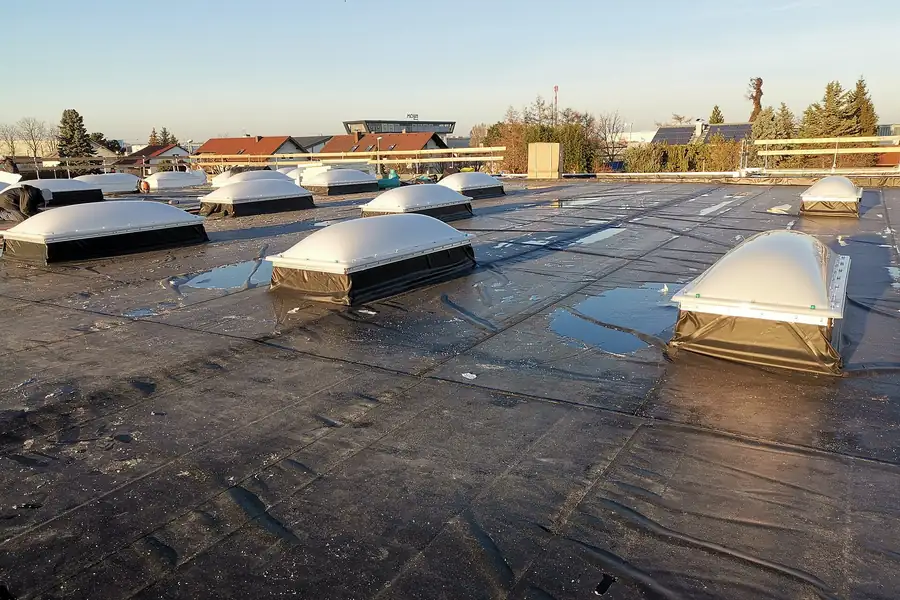
Plenty of storm damage can’t be fixed for good on day one. The right tiles may be out of stock, or it may still be too windy to work safely. So a roofer will often make it watertight first: a tarpaulin fixed over the damaged area, loose tiles put back, a ridge tile screwed down for now. On a flat roof it’s usually a lifted seam or a loose edge trim, which a strip of bitumen can close until the weather settles.
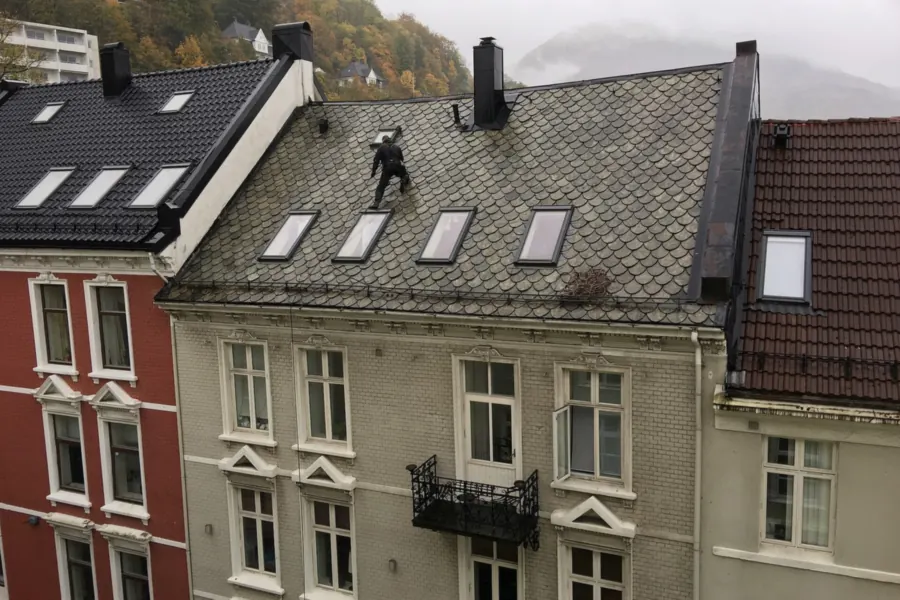
Ask for the emergency work to be invoiced separately. Insurers generally reimburse the cost of stopping things getting worse, as long as the damage itself is covered, and before-and-after photos from the roofer help.
The permanent repair comes once it’s dry and calm. On a tiled roof that means matching tiles (in older streets a hunt in itself, as some patterns are no longer made), checking the battens and refixing the ridge. On a flat roof we also look underneath. If the insulation has soaked up water, taping over the seam just hides the problem for a while.
Rough costs for storm repairs in Amsterdam
Nobody can price a roof they haven’t seen, but Dutch price guides give a ballpark. These are indicative figures from comparison sites, not our rates:
- roofer’s hourly rate in the Randstad: 60 to 90 euros including VAT (Homedeal)
- a small roof repair: 200 to 500 euros on average (Homedeal)
- repairing a pitched roof: 150 to 230 euros per m², VAT and labour included (Homedeal)
- refixing ridge tiles: 35 to 55 euros per metre (Werkspot), or 40 to 60 euros screwed and 70 to 80 euros bedded in mortar (Slimster)
- tracing a leak: 150 to 500 euros, around 300 euros on average (Homedeal)
VAT on roofing is 21 percent, labour included. The reduced 9 percent rate only applies to fitting insulation in homes more than two years old, so a storm repair doesn’t qualify.
Amsterdam adds a few costs of its own. Scaffolding or a skip on the street needs a permit or notification from the gemeente (municipality), which takes time and fees. In the old centre a cherry picker often can’t get anywhere near the door. Ask for a quote that splits out the emergency repair, the final repair, materials and any scaffolding. Your insurer will want it that way too.
Living in a flat? The roof probably isn’t yours alone
Most Amsterdam apartment buildings are run by a VvE (vereniging van eigenaars, the owners’ association), and the roof is a shared part of the building. That applies whether you’re in a gallery flat in Zuidoost, a 1950s block in Slotermeer or a split-up house in De Pijp. A leak into the top floor is the VvE’s problem to organise, even if it’s your ceiling.
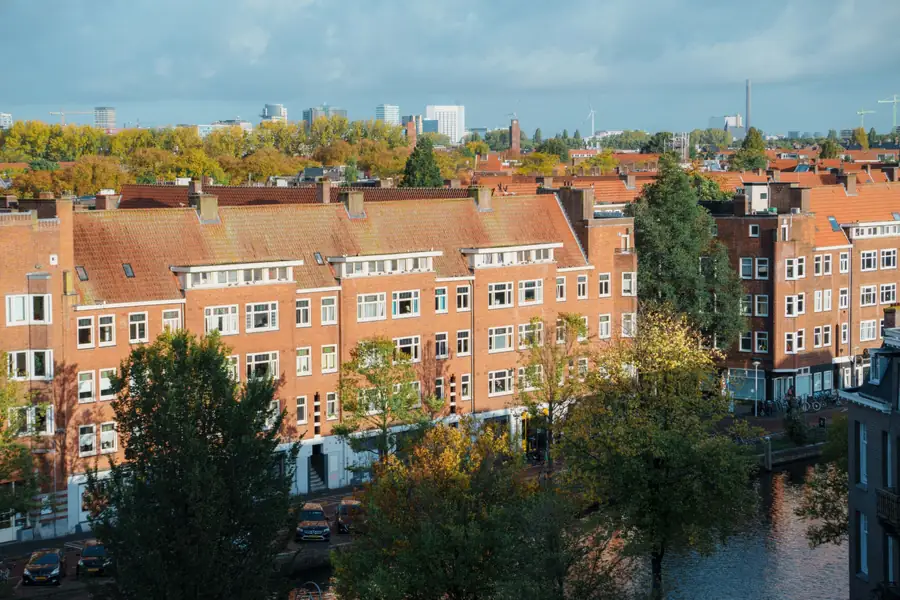
The VvE’s buildings insurance normally covers shared parts, the roof included. Your own sofa and laptop go on your contents policy. In practice that means two phone calls: one to the VvE’s managing agent about the roof, one to your own insurer about your things. Renting? Tell your landlord the same day and put it in writing.
Since 2018 every VvE has been legally required to save for major maintenance, either through a maintenance plan (MJOP) covering at least ten years or by putting aside at least 0.5 percent of the rebuild value each year. The Dutch government’s guidance on VvE reserve funds sets out the rules. A roof that has sat in the plan for years, pushed back one more year each time, is exactly what an adjuster will ask about.
Amsterdam’s recent storms, by the numbers
On 18 February 2022 Storm Eunice hit the Netherlands. The KNMI called it the heaviest storm since 1990 and issued code red for the coastal provinces, North Holland included. In Amsterdam Nieuw-West, parts of the roof came off the Startblok Riekerhaven housing complex and one block was evacuated after roof structure fell into a flat.

Then, in the middle of summer, came Storm Poly on 5 July 2023. According to the KNMI report on summer storm Poly, IJmuiden logged gusts of up to 146 km/h, one of the heaviest summer storms in more than fifty years. In Amsterdam trees came down on cars in Scheldestraat and Beethovenstraat. Summer storms are sneaky. Trees in full leaf catch more wind, and few people check their gutters in July.
The rain side is changing too. The KNMI says days with 50 millimetres or more now happen roughly twice as often as around 1950. So a roof that comes through a storm with one slipped tile will often meet a heavy downpour soon after. Have it checked after a big blow even if the ceiling looks fine. A displaced tile doesn’t always leak straight away, only when the rain comes from the wrong direction.
Leaking after a storm, or just want to know the roof came through it in one piece? Book an inspection or quote in Amsterdam. We’ll take photos your insurer can use and give you a costed breakdown, in English or Dutch.
Frequently asked questions
Will my Dutch home insurance pay for a roof leak after a storm?
Usually, provided it was officially a storm. Univé, for example, counts wind of at least 14 metres per second measured by the KNMI, which is force 7 on the Beaufort scale. Blown-off tiles and the rain damage that follows are then covered by the opstalverzekering (buildings insurance). Some insurers set the bar higher, so read your policy terms. Damage caused by poor maintenance is not covered.
How much does an emergency roof repair cost in Amsterdam?
It depends on the damage and how easy the roof is to reach. Price guide Homedeal puts roofers in the Randstad at 60 to 90 euros an hour including VAT, and a small repair at 200 to 500 euros on average. Roofing work carries 21 percent VAT. You only get a firm price once someone has seen the roof.
I rent or own a flat. Who deals with the roof?
In an apartment building the roof is normally shared property, so it falls to the VvE (owners' association) and its buildings insurance. Tenants should tell their landlord straight away. Damage to your own furniture and belongings goes on your contents insurance (inboedelverzekering).
Which weather station does my insurer use to check the wind speed?
Insurers rely on KNMI measurements, the Dutch national weather service. Which station they use for your address is something to ask when you report the claim. Keep a note of the date and time the damage happened so they can check the right data.